entries Tagged as [education]

Art and design

Interesting article over at Web Designer Depot on the differences between art and design.

As I like to reiterate in my classes, ‘Graphic design isn’t an art field, though it can contain elements of art. It’s a communication field.’

Big difference.

Hangul at the Design Museum

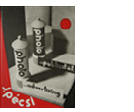
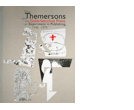
Claudia Pungaru, one of my students, turned me on to the work of Dr. Hyunju Lee. Lee’s work is typographic and she uses the Korean script Hangul as a starting point for expressive interpretations – about Korean life and culture.

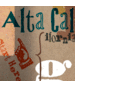
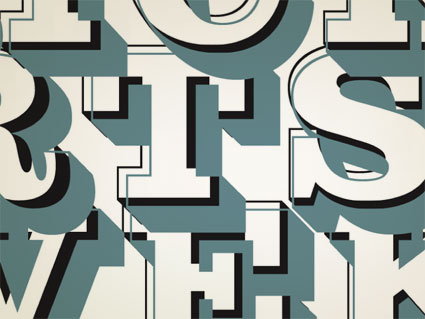
Ongoing right now is Typographic Exploration in Hangul: An Exhibition of work by Hyunju Lee and Phil Choo (work pictured above) at the UC Davis Design Museum. In the show, letters evoke emotions – all tied to the tradition and sounds of the Hangul writing system.

For more information about the show, go here. The Design Museum’s site is here.

The museum is open limited hours Monday thru Friday, and on Sunday afternoons. Show ends December 6, 2009.

Image found via design in society

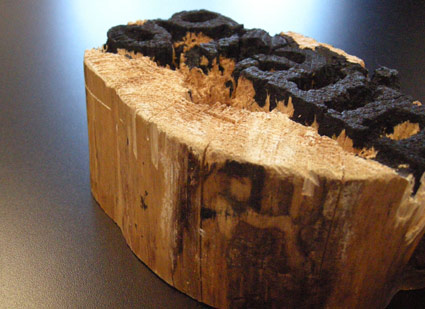
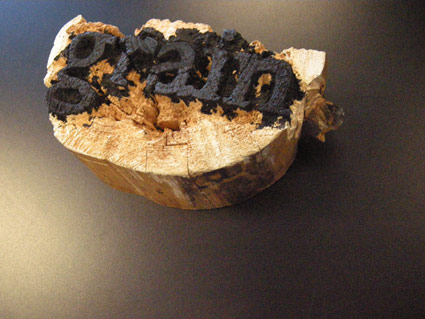
Wood type

Experimental final project from my beginning typography course. Carved by student Rikki Morehouse.


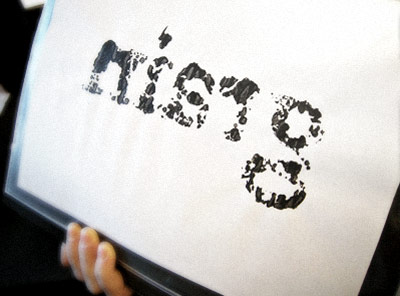
First print  . . .


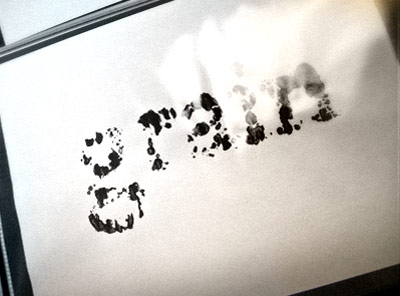
Offset print made from first print

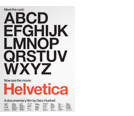
Typeface: A Documentary

‘Charting the intersection of Rural America and Contemporary Graphic Design’

The film about the Hamilton Woodtype Museum is making the rounds.

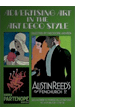
Official site here. Pictured: promo prints for the documentary.

Found via “JE NE SUIS QU’UNE PAUVRE PLUME…”

Slab serif ‘Egyptian’ types: A history

Here’s a detailed history over at Hoefler & Frere-Jones on slab serif typefaces; showcasing their new Clarendon-based Sentinel fonts.

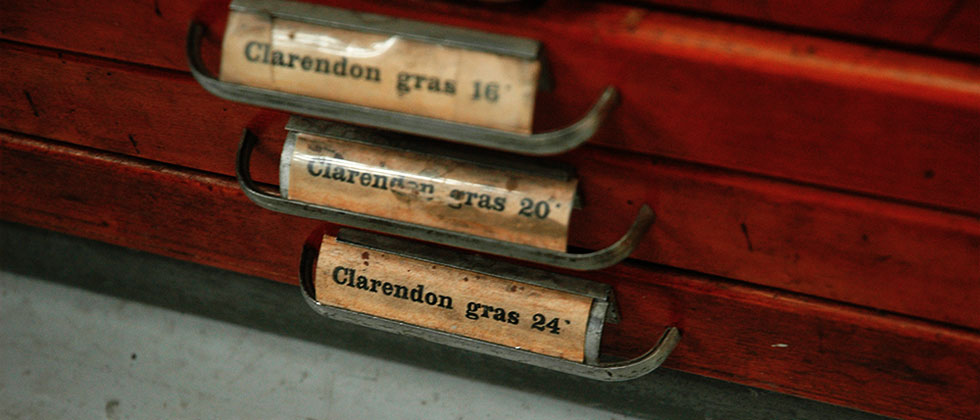
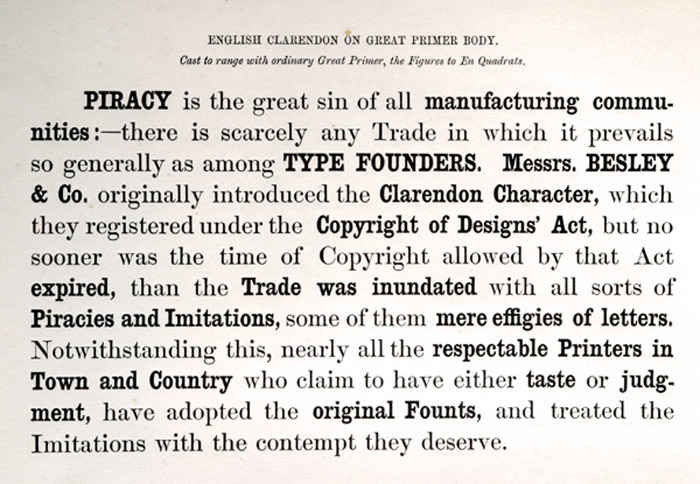
The Clarendon types: A history

The Know your type series at idsgn continues with an overview of Oxford-bred, 19th Century wonder Clarendon.

Parkinson’s Sutro fonts


ADAC 38th season promotional material

It’s not often one gets to meet one of their heroes.

When I was in high school, a bunch of kids thought it would be funny to sign me up for every magazine subscription they could find – by sending in a large pile of subscription cards. My parents were not amused; but it was Rolling Stone that I kept. I fell in love with the hand-inked masthead – and decided that that was what I wanted to do.

Hand-ink mastheads.

Not a big field. And who knew people actually did this? I wanted to do it, and early attempts (for my high school paper) netted not so wonderful results. Who knew that someday I’d actually be drawing fonts as a consequence.


Rolling Stone masthead by Jim Parkinson

Around five years ago, I finally met the guy behind the logotype – lettering artist Jim Parkinson. And the conversations have been great – as long as I don’t actually call him hero, he’s cool. And (who knew?) we both like fresh anchovies. Which I’ve found can gross out anyone who is eating near us.

using jim’s fonts
I used Jim Parkinson’s Sutro fonts on promotional materials for the 38th season of the Sacramento Art Directors and Artists Club. I was the newly appointed president, so I was determined to use fonts from the best of the best and (of course) Jim was on my list. [Read more →]

Making a type sample


The Making of a Type Sample from FontShop on Vimeo

Once a font is completed, showing the letters and glyphs in their best light is a tricky exercise. FontShop does it right and in this video shows some of the decisions made when creating a good type sample – in this case, the sample for Matthew Carter’s beautiful Miller typefaces, which I used for The Sacramento Union Magazine.

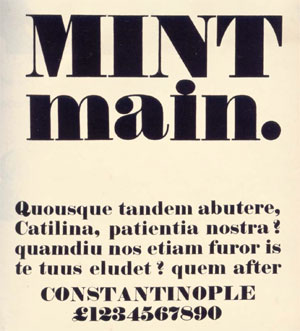
In the 1800s, type foundries used to set their samples in Latin – following the belief that our alphabet looks best in its original language. Marcus Tullius Cicero’s first speech against Lucius Sergius Catilina (below) was popular for samples.

Today, graphic designers use Lorem Ipsum for placeholder text.


Robert Thorne’s Fat-Face type sample, 1821

Information design: Life, death, taxes and spam

‘Le Grand Content examines the omnipresent Powerpoint-culture in search for its philosophical potential. Intersections and diagrams are assembled to form a grand ‘association-chain-massacre’ which challenges itself to answer all questions of the universe and some more.

‘Of course, it totally fails this assignment, but in its failure it still manages to produce some magical nuance and shades between the great topics death, cable tv, emotions and hamsters.’

For more about the work of Clemens Kogler, go here.

Redesinging the threat level

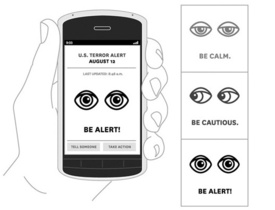
‘To mark the return to sanity, The New York Times asked four graphic designers to imagine a new warning system. Their designs range from the cheeky to the possibly useful. Kurt Andersen provides commentary and explains why the current system is a joke.’ -Andrew Price, GOOD

Legendary SPY magazine was one of my favorites – and founding editor Kurt Andersen is still making snarky commentary. Click either the image or the quote link to read more.

For more from Kurt, check out his weekly radio program Studio 360 and ‘Get inside the creative mind.’

And for the record, I am really glad the Obama administration recognizes the value of good graphic design. Makes me all warm and fuzzy inside just knowing this.

Found via GOOD

Penguin by Illustrators

When it comes to design, UK-based Penguin Books produces some beautiful specimens. And here’s a write up by Ace Jet 170 on the Penguin Collectors Society and their wonderful Penguin by Illustrators monograph.


Creative Commons License

the work at the mehallo blog. beta. is licensed under a creative commons attribution - noncommercial - no derivative works 3.0 united states license.  if reposting, credit must be given to steve mehallo - and if possible, please provide a link back to the mehallo blog. beta.

i include images for the purpose of critique, review, promotion and inspiration - and always make my best effort give credit/link back to the original source.  if i’ve screwed up, please fire me a note.

page layout based on the wordpress 'darkwater theme' by antbag, adapted and redesigned by mehallo.  valuable php assistance from bill mead.