entries Tagged as [avant garde]
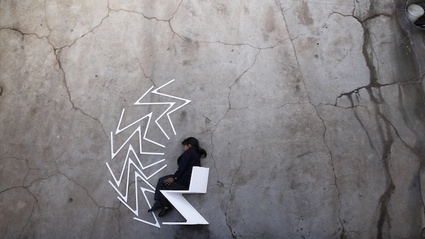
The Danny J. Gibson Show
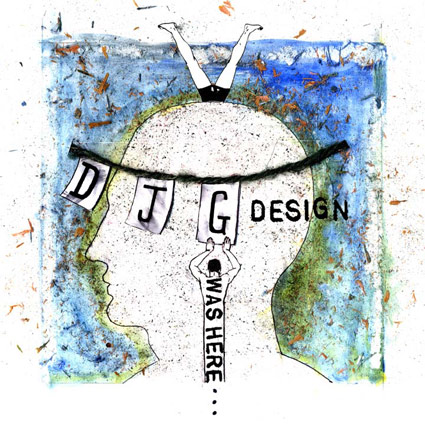
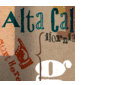
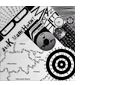
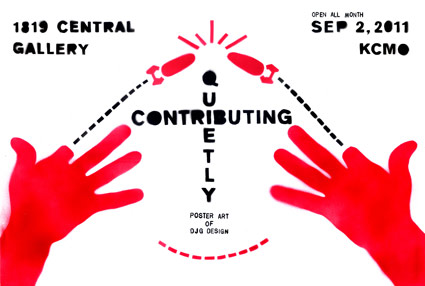
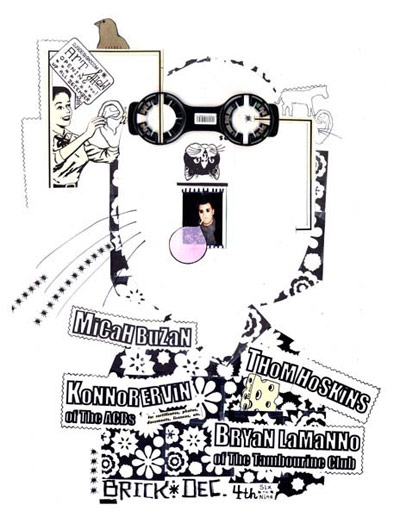
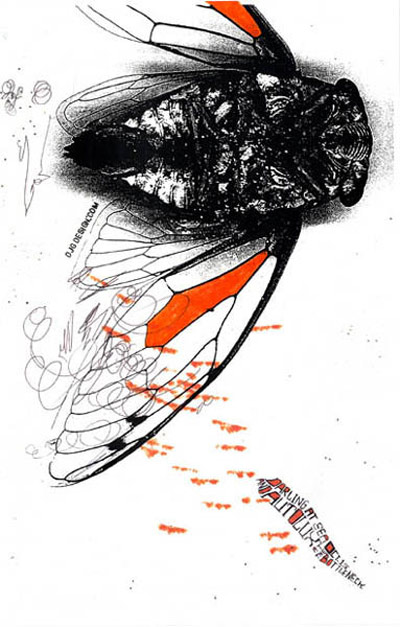
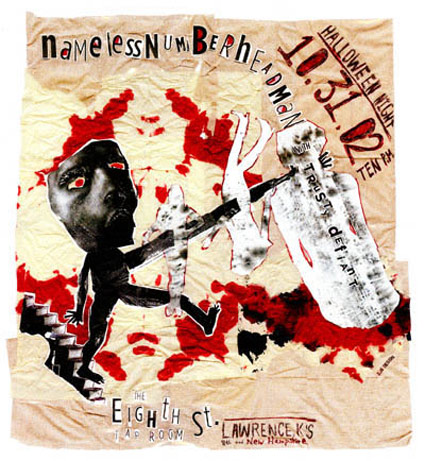
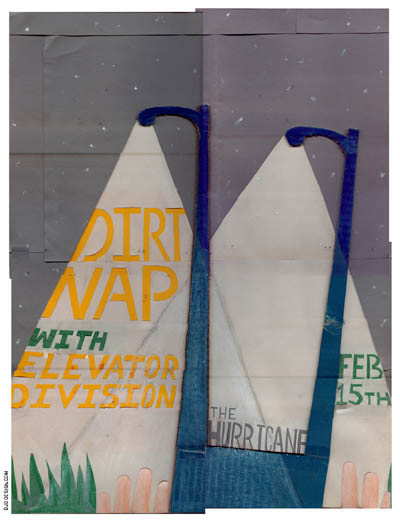
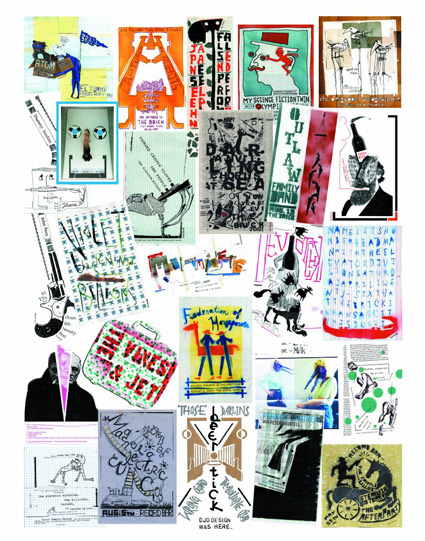
‘For a decade, Danny created art for musicians – album covers, event posters, and logos, among others. Now those artists are paying tribute to Danny with a free, downloadable 35-song album titled ‘DJG Was Here.”
Danny J. Gibson’s been a friend for years – and he’s one of the most prolific, experimental artist/designers I know. In a few days Quietly Contributing – Poster Art of DJG Design will open at the 1819 Event Space + Gallery in Kansas City.
More details here. Snag the free album here (please use the tip jar).
Article here. And visit Danny’s site here.

Höch 1920
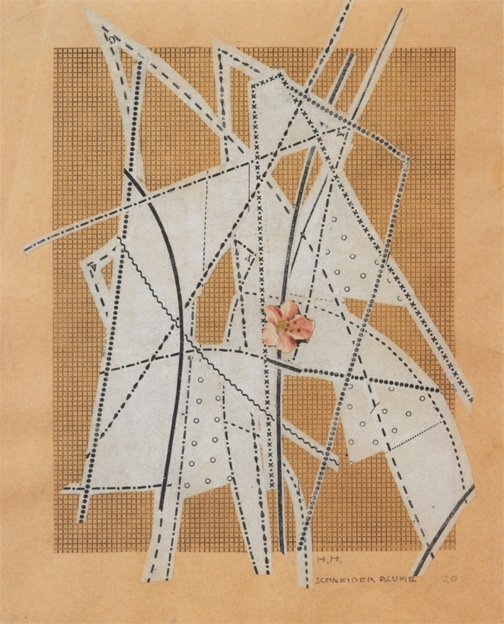
The work of Hannah Höch, Tailor’s Flower, 1920.
Yan Saquet: Les Djinns (Trentemøller Remix)
Found via Venetian Red
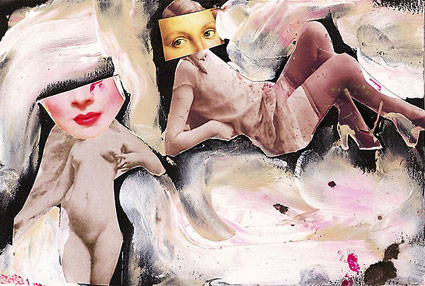
‘pretty, pretty’
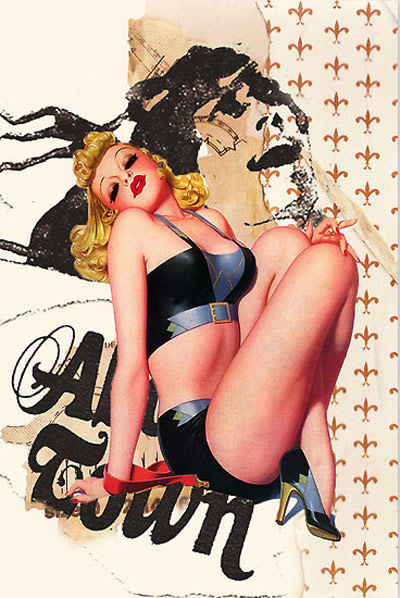
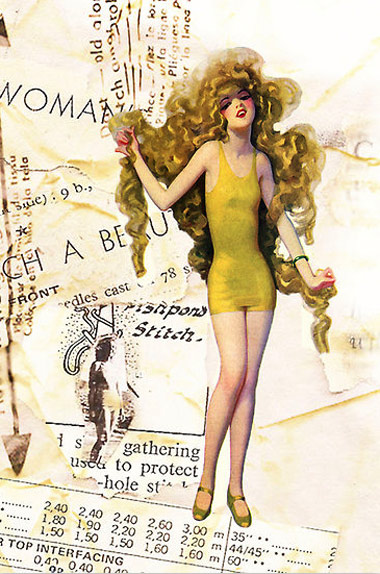
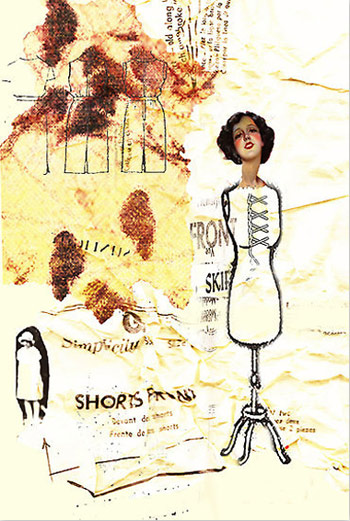
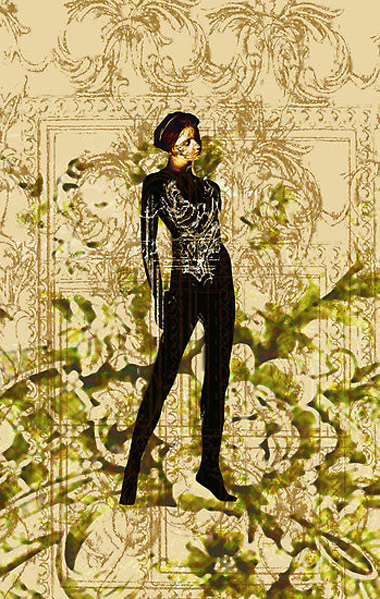
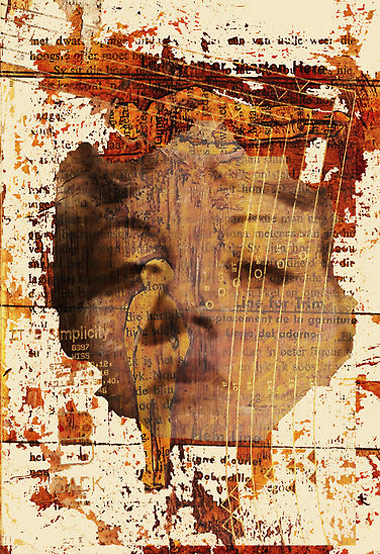
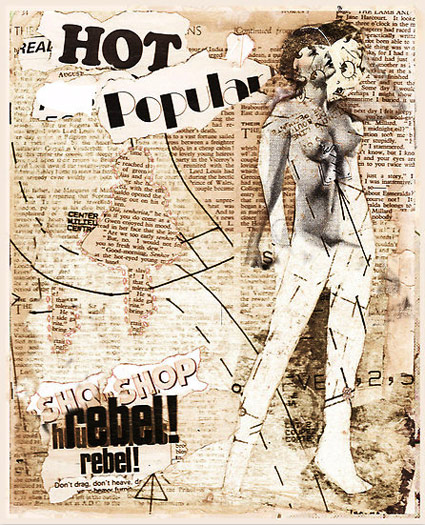
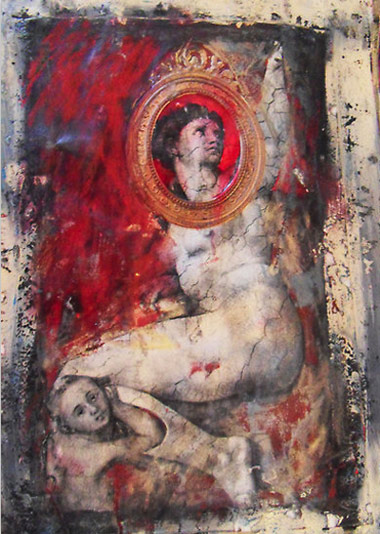
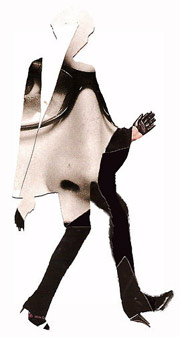
‘I am interested in the female form and the objectification and dismemberment of women. I try to make sense of this dismemberment by the very act of dismembering . . . more often than not, the artworks manifest themselves through the female gaze.’
The mixed media work of Thelma van Rensburg.
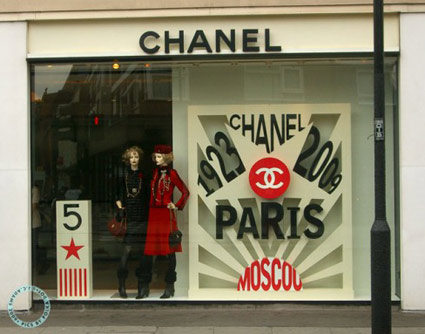
Russian Coke
Art Nouveau meets Russian Constructivism. Motion design by Matt Duplessie.
Red Son
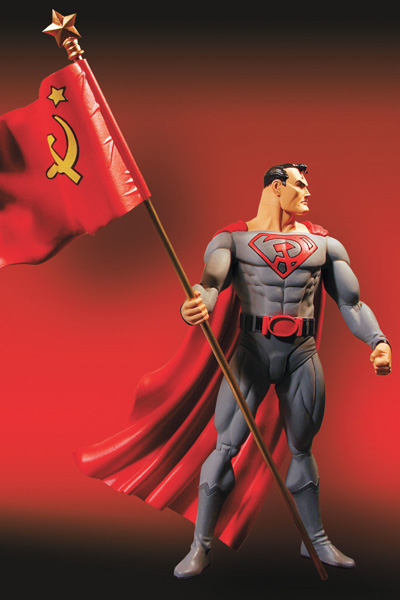
Superman, as portrayed in Mark Millar’s Red Son (2003).
Motion comic here.
Found via Raving Toy Maniac
Eastern Block
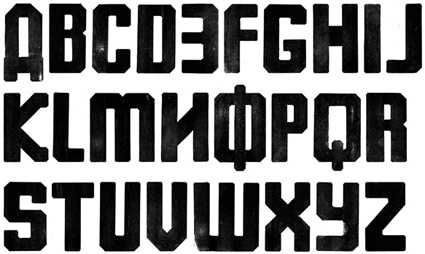
‘A typeface designed to reflect the aesthetic qualities of Soviet Union product design and manufacture. The typeface uses a unilateral x-height, cap height and faux Cyrillic to create a blocky, angular and awkward response. To allude to the dated methods of production, I produced the entire face as printing blocks.’
Andy Barnes’ Eastern Block typeface. Website here.
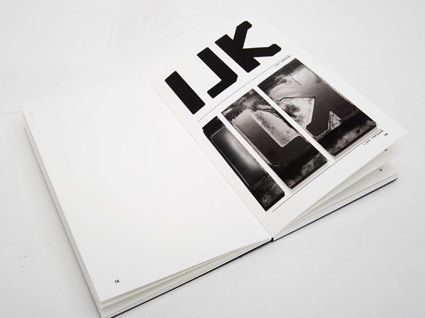
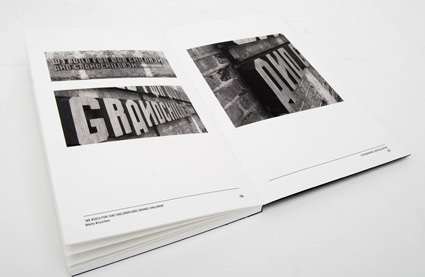
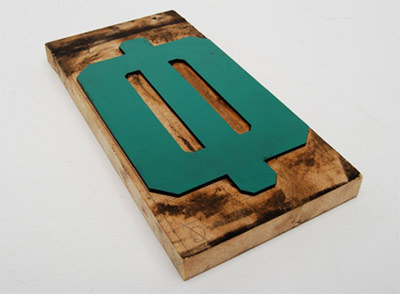
Found via Arts Thread
Suprematism/Constructivism, experiments
Stefan Bürke’s Airplane Flying
Two short interpretations of the work of Suprematist Malevitch and Constructivist Lissitzky.
Jostein Finnekaasa’s Suprematism/Constructivism
Sensation, Flight
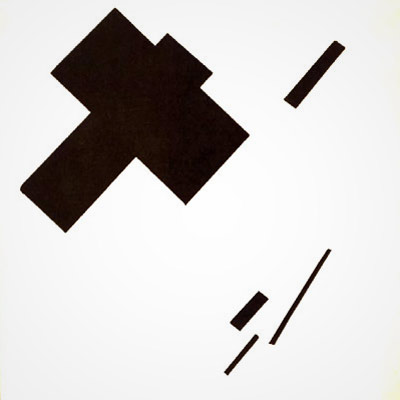
‘Suprematism, considered ‘the first systematic school of abstract painting in the modern movement,’ was developed by Kazimir Malevich in 1913 and introduced at the 1915 0-10 exhibition in St. Petersburg.’ –Alexander Boguslawski
This is my favorite Suprematist piece, Malevitch’s Sensation of Flight, c. 1914-15. Pure objects, any meaning comes from the viewer’s own interpretation.
Shifted Constructivism
Constructivism by Ukraine-based video art/vj collective, Shifted VJs. Music by Evol Intent.

handpicked posts

a piano falls in old manhattan
tetro and typography
it’s typography: film, song and dance
ghosts of gustov klimt
the great times new roman controversy
picking fonts
kapitaal
defining terms: design is not decoration
garcia's 'pure design'
'enhance that image!'
magic highway remixed
the cynic
rad anthem
Brought to you by man dom-


buy my fonts
go shopping
mehalloreads
Divinely Elegant: The World of Ernst Dryden
Jozsef Pecsi: Photo and Advertising
Color: A Natural History of the Palette
Collage: Assembling Contemporary Art
Modern Dog: 20 Years of Poster Art
Gaberbocchus Press: An Experiment in Publishing, 1948-1979
Advertising Art in the Art Deco Style
Googie Redux: Ultramodern Roadside Architecture
Hot Sour Salty Sweet: A Culinary Journey Through Southeast Asia
now playing





the work at the mehallo blog. beta. is licensed under a creative commons attribution - noncommercial - no derivative works 3.0 united states license. if reposting, credit must be given to steve mehallo - and if possible, please provide a link back to the mehallo blog. beta.
i include images for the purpose of critique, review, promotion and inspiration - and always make my best effort give credit/link back to the original source. if i’ve screwed up, please fire me a note.
page layout based on the wordpress 'darkwater theme' by antbag, adapted and redesigned by mehallo. valuable php assistance from bill mead.